

Medical Astrology for Herbalist & Healers: The “On the Spot” Method
Moving forward I will gather questions during the Mercury retrograde cycles from social media platforms and answer them in my continued efforts to shift HOW I think about and relate with social media. The answers will be in written or video format in order to create something like a Q & A archive.
The first question comes from a fellow student in the evolutionary herbalism community. It is as follows:
What are the “Essential steps and variables to look for in a chart in order to see imbalances in a person’s chart at a glance (Sun, Moon, Rising, focalizers, 6th house, etc.), during a consultation, like an efficient, on-the-spot method to quickly confirm or infirm suspicions as to what is going on”
Introduction
This article is for everyone from beginner to advanced however, a few pre-requisites should be taken into consideration in order to properly apply this with discernment:
Beginner-intermediate level knowledge of herbalism
Correlation of the planets in relation to organs/organ systems
“On the Spot” Method
I will discuss the steps, add logic to some of the steps, and then give an example at the end. Be mindful, this is a process that should not take excessive thinking. If you find yourself confused, I strongly invite you to continue to educate yourself on the concepts discussed and/or reach out directly to receive one on one perspective on how you can implement this type of method into your understanding practice with integrity and deep care. Remember this is one of many approaches, one that can be modulated, made more or less elaborate, and is meant to be a template of HOW to think “on the spot.”
Take a moment and observe the steps below while contemplating your own chart in order to center yourself prior to incorporating HOW I think about it.
Step 1: Don’t forget your training
Step 2: Find the Ascendant and the planet that rules the Ascendant
Step 3: Identify the Sun sign
Step 4: Identify the Moon sign
Step 5: Note elemental excess or voids
Step 1: Don’t forget your training
It is imperative when someone is approaching medical astrology as an “add on” to another modality that they know HOW to think about the incorporation of medical astrology. When attempting to add, be sure you are rooted and centered in your current practice. This removes overthinking and stressing over the desire to be “100%” precise in a practice that you have not yet put the time in to be versed in to this point. Allow the astrology to overlay and compliment what you already do. If you are looking at the chart first, don’t come to unnecessary conclusions, if you are looking at the chart second, do not allow yourself to be confused if the information seems to be conflicting. In ancient times, when practicing traditional medicine alongside medical astrology, everything would be a cumulative understanding. Look to stack confirmations, this is called “testimonies.”
Step 2: Find the Ascendant and the planet that rules the Ascendant
The Ascendant or “rising sign,” throughout the history of the Medical astrology tradition(s) has been the focal point and starting place when systematically approaching the natal chart. The ascendant is the “self”, the appearance, the health and state of the native. The ruler of the Ascendant also says more about the general state of the native. Since we are doing an on the spot method we want to keep it as simple as possible. Here are things we need to keep an eye out for:
The ruler of the Ascendant in the 6th, 8th, or 12th house
The ruler of the 6th, 8th, or 12th house in the Ascendant sign
Saturn in the Ascendant sign
Mars in the Ascendant sign
Outer planets in the Ascendant sign
Hard aspects from Mars, Saturn, and the outer planets to the Ascendant ruler (Hard aspects include; square, opposition, and inconjunctions)
The logic of step 2
In developing this approach, it is for medical astrology purposes, so you’re looking for potential problems. As a budding astrologer, be mindful of this because it makes sense in the context of medical astrology but perhaps not the wisest approach when looking at charts more generally. (Although these placements do tend to manifest in subjectively difficult experiences generally.)
In medical astrology the 6th, 8th, and 12th houses are considered “houses of health,” but in ancient times, they were houses that pointed more towards being unwell. You want to see if the ruler of the 1st house, representing the health and state of the native is in a house that has a theme of being unwell. If it is in the 6th, 8th, or 12th, note what sign it is in and the essential dignity (which speaks to how resourced the planet is in that sign). If the ruler of the Ascendant is not resourced, we want to take note of this as their health is in a space and place that is known for difficult situations that can take away from the overall health. If the planet is resourced, I would keep it in mind but not worry about it too much.
When I see the ruler of the 6th, 8th, or 12th in the 1st house, I tend to pay a bit more attention. The reason is because the things that can be spaces and places that represent being unwell are COMING TO the native. Stay aware of when you see more than one of the things I mentioned to keep an eye out in the chart.
Step 3: Identify the Sun sign
The Sun represents the heart, the cardiovascular system as a whole, and in this method we are going to focus on the Sun from the lens of Judith Hill, who says, “the position of the Sun in the planetary health chart indicates both the quality and quantity of our natural Vital Force.” Look at the Sun by sign, house, and aspects. Note if it is resourced or not. If it is not resourced then we must be mindful the vital force or “life battery” of the native may not be inherently highly resourced, never forgetting the information we already have acquired through holistic evaluation and steps prior.
Look out for hard aspects to the following planets as they can cause major issues for the natives' vital force:
Mars
Saturn
Outer planets (Uranus, Neptune, and Pluto)
Also take note if the Sun is in the 6th, 8th, or 12th house.
Sun-Mars can create heat/excitation or cycles of burnout
Sun-Saturn can create a restriction to the vital force
The Sun and the outer planets can create extreme fluctuations to the energy levels and are often connected with unconscious psychological processes.
***Also take notice if the Sun is within 7 degrees of another planet, which would create a state of “combustion.” When a planet is combust, it tends to experience a disturbance, usually of a stimulus that brings heat & dryness to the planet afflicted by the Sun. Consider the organ system that the planet represents.
Step 4: Identify the Moon sign
The Moon in medical astrology represents the ability to absorb nourishment, the mucosal membrane, the “stomach,” an indicator of the womb (secondarily to Venus according to Mychal A Bryan), and the breast. According to Mychal A. Bryan, “The Moon is also thought to govern the myelin nerve sheaths, protective fat based membranes that wrap around part of certain nerve cells, shielding them and aiding in the transmission of nervous impulses.” I love this distinction because it shows HOW the Moon has to do with the protective covering of the nerves while Mercury is the predominant ruler of the nervous system as a whole. Distinctions like these are important to make when thinking about medical astrology overall. In this “on the spot” method, emphasize the ability to digest and absorb nourishment in relation to the Moon. The Moon is also an indicator for the emotional orientation of the native, which is just as important in Medical astrology as the general natal chart perspective. Other principles of understanding the Moon can be applied here as well based on your training and education on how to delineate the Moon placement. The Moon is a very multifaceted planet and can be delineated with nuanced and extraordinary depth, but for our purposes we want to keep it simple and note the same factors we would with the placement of the Sun which are repeated again below
Look out for hard aspects to the following planets as they can cause major issues for the natives' ability to digest and absorb nutrients:
Mars
Saturn
Outer planets (Uranus, Neptune, and Pluto)
Mars-Moon can create digestive issues of heat/excitation
Moon-Saturn can create digestive issues of cold/depression
The Moon and the outer planets can create extremes as well and are often connected with unconscious psychological processes.
Also take note if the Moon is in the 6th, 8th, or 12th house.
Step 5: Note elemental excess or voids
This is the simplest of all the steps and if any other step is confusing, keep this step and leave the rest for now. Scan the natal chart to see if an abundance or lack of earth, water, air, or fire is present. In this method I do not give much weight to the outer planets of Uranus, Neptune, and Pluto. Because these are not visible planets and stay in the element for collectives of people, they are not personal enough for me to individualize them on a tangible level. Since we will only be using the 7 traditional planets of Saturn, Jupiter, Mars, Sun, Venus, Mercury, and Moon for this step we want to note the following:
If 4 or more planets are in one element
If 5 or more planets are in dry signs (earth and fire)
If 5 or more planets are in wet signs (water and air
If any element has no planet present
Using your understanding of the tissue states in herbal medicine, take into account how this adds a layer of information just as if you were looking at the tongue, checking the pulse, or in ancient times, assessing the urine or stool.
Example chart
Review again the 5 steps of the “on the spot” method before engaging with the example below. Really take a moment to be with it as the repetition and contemplation builds understanding through relationship with the concept.
Step 1: Don’t forget your training
Step 2: Find the Ascendant and the planet that rules the Ascendant
Step 3: Identify the Sun sign
Step 4: Identify the Moon sign
Step 5: Note elemental excess or voids
Step 1: Don’t forget your training
In the context of this client, I could see many things based on the shape of her body although I did not look at the tongue nor check the pulse for added information. Be sure to use your personal evaluation tool kit here.
Step 2: Find the Ascendant and the planet that rules the Ascendant
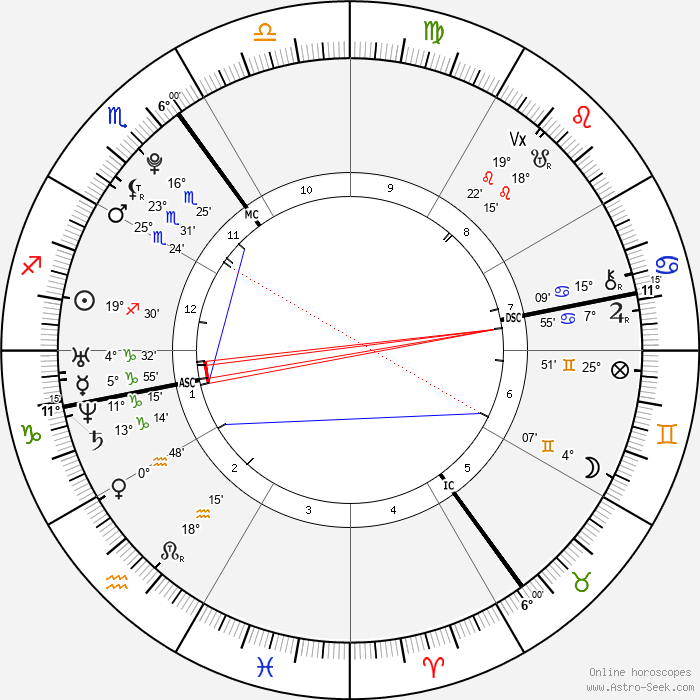
In the chart above we have Capricorn rising. We know that Capricorn rules the knees as a location. Next we look to the ruler of the Asc, which is Saturn, also in the 1st house. Saturn as a planet rules the musculoskeletal system, with an emphasis on joints, tendons, and ligaments. Saturn is also a planet that is cold and dry, which is imprinting the native.
Notice also how three themes we discussed to keep a look out for are present in this chart.
The ruler of the 6th, 8th, or 12th house in the Ascendant sign
Saturn in the Ascendant sign
Outer planets in the Ascendant sign
Mercury, the ruler of the 6th house is in the 1st, Saturn is in the 1st house, and the outer planets, Neptune and Uranus are also in the 1st house. These are strong considerations as we continue to move forward. I am taking it for granted that you understand generally what these mean. If you do not, go back to the beginning of the article links will be presented where you can find out more about the planet and zodiacal correspondences.
Step 3: Identify the Sun sign
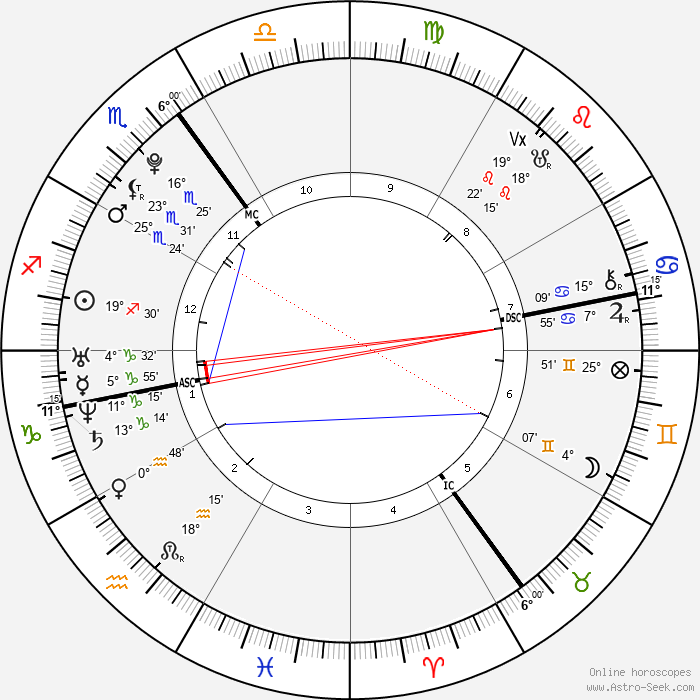
Sagittarius is a place the Sun has adequate resources, however, we know that the 12th house is a place that can be an indicator for being unwell.
Step 4: Identify the Moon sign
The Moon does not have resources in Gemini and is in the 6th house which is an indicator of being unwell.
Step 5: Note elemental excess or voids
Remember that in this step we are only focusing on the placement of the 7 traditional planets. In the chart above, it shows that based on the traditional planets locations it does not have any excess or void of elemental forces. Therefore, this step does not apply to this chart. When a chart does have an excess, consider what the manifestation of the imbalance would be. If fire, heat/excitation, air, wind/tension, if water, damp/stagnation, if earth, cold/depression. All of these tissue states can potentially lead to dry/atrophy or damp/stagnation at later stages depending on the symptomatic patterning.
Condition of the Native and explanation
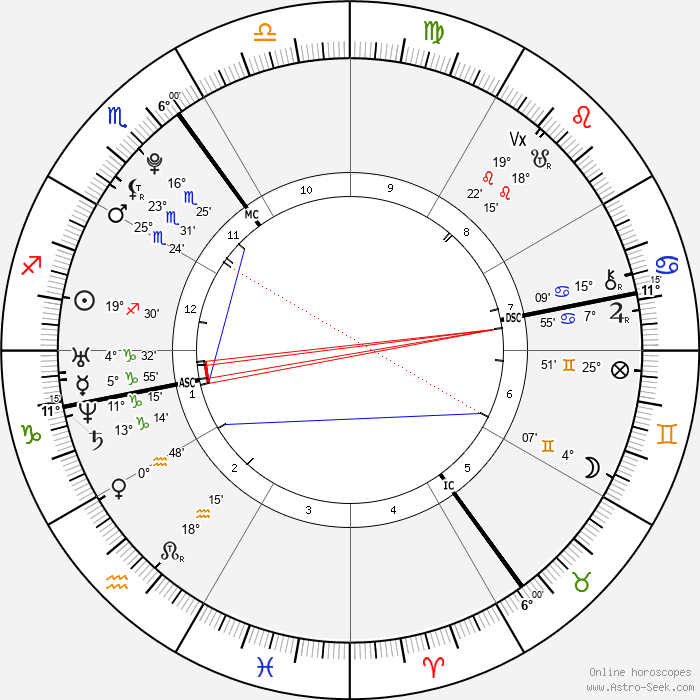
In the above chart the symptoms shared were as follows;
Immune system deficiency
Ear/nose/throat issues
Tendency to tire easily
Difficulty holding onto weight
Remember, this article is not made to give you all the answers, it is meant to make you think, deepen your relationship, and allow you to come up with your own approach. In other articles, I will lay out more elaborate case studies in order that will analyze the chart in full.
Based on what you know about astrology and herbalism, comment below and let me know how you perceive these are manifesting, what herbs and remedies you would hypothetically utilize, and any other general ideas around the chart or the method laid out here. No right or wrong answers exist as this is simply practice and a relationship building exercise.